
The Speech Sound Pics (SSP) Approoch is the only self-paced phonics approach for Reception Classrooms. Get in. Get out!


Develop speech sound awareness through Phonemies Play, supporting children before or alongside systematic synthetic phonics (SSP).

The 10 Day Speech Sound Play Plan
for Reception Pre-Phonics
Phonemies® are used within Speech Sound Play (pre-phonics).

The Family of Phonemies® are Phonetic Characters that represent the phonemes (speech sounds) of English. Each Speech Sound Monster® represents a speech sound, rather than a letter or grapheme, so children can see the sounds in a spoken word.


When Phonemies® are placed in sequence, children can follow the characters from left to right, say each speech sound and blend the phonemes to say the word.
“Follow the Monster Sounds to Say the Word!”
Did you know that children who can isolate and manipulate speech sounds early on are far more likely to become confident, independent readers—even before formal instruction begins? Have fun with word mapping, and better support speech, language and communication needs!
You can start Speech Sound Play activities when they are toddlers! Claire is only two here in this clip. We already know she will read with ease.
Why use Phonemies® before phonics?
Phonemies® make the phonemes in spoken words visible before children are expected to connect those sounds with letters.
For a child at risk of later reading difficulties, this provides an opportunity to explore, identify, sequence and blend speech sounds without also having to learn grapheme–phoneme correspondences. The child can see that a spoken word is made up of individual phonemes and can manipulate those phonemes using Phonemies® before phonics begins.
This is particularly important for non-speaking children. Traditional phonemic awareness activities often require a child to say a word, pronounce individual phonemes or respond verbally. A child who cannot speak may understand the task but be unable to demonstrate that understanding in the expected way.
Phonemies® provide an alternative response mode. A non-speaking child can select, point to, order or manipulate the Phonemies® that represent the speech sounds, allowing them to participate in phonemic awareness activities without speech being required.
The aim is not to replace speech sounds with pictures. The Phonemies® represent the speech sounds, giving children a way to see, select and manipulate phonemes before those phonemes are mapped to graphemes during phonics.

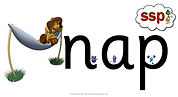

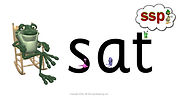


The 10 Day Speech Sound Play Plan for Reception Classrooms
(Speech to Print Introduction to Phonics)
This order of introducing children to letters and sounds makes more sense to them because it starts from speech. They begin by thinking about the speech sounds used to produce whole words, so when they later consider the written form, the pictures of the speech sounds, the graphemes make sense. By using the Phonemies (Speech Sound Monsters®), they also see that sound pictures can represent many different sounds as they explore the Monster Mapped Words®.


From Day 1 you are screening children to see if they can isolate sounds, blend and segment them.
The Speech Sound Monsters show the sounds, which is going to be really useful when the code gets move complicated!
Reception Parent Resource: The Ten Day Speech Sound Play at Home
Speech Sound Pics®: Self-Paced Orthographic Learning Journey
The following captures the learning order, terminology and key details.
Key points relating to the Speech Sound Play Plan.
-
Children can start Speech Sound Play from age 3+ at home or in pre-school, and use the Phase 1 lessons, but the aim is to move into the Speech Sound Pics® (SSP) Approach as soon as they are ready.
-
Every Reception class begins with the 10-Day Speech Sound Play Plan before the Speech Sound Pics® (SSP) Approach.
-
In Reception, graphemes are introduced on Day 5 of the 10-Day Speech Sound Play Plan. On Day 11 children move into the SSP Core Code.
-
Speech Sound Play introduces the 60 Second Spelling Routine using Phonemies® only.
After completing the 10-Day Speech Sound Play Plan, Reception children are ready to begin the SSP Core Code. Children who started Speech Sound Play before school may be ready much earlier.
Once they know the Speech Sound Monster sounds, they can use them to map any word, not just words consisting entirely of the SSP Core Code, supporting independent self-teaching from the earliest stages.
Reception Parent Resource: Phonemies® and Sound Pics® (Graphemes)
Reception Parent Resource: Is your child ready for Sound Pics® (Graphemes)?
We introduce them on Day 5 of the Ten Day Speech Sound Play Plan
Reception classroom teachers often need to begin the phonics programme quickly, which is why the Speech Sound Play Plan lasts just 10 days. No rush? There are 30 lessons here that centre on phonemic awareness and phonological working memory, providing an easier introduction to phonics in the early years.
Paper (origami) Speech Sound Duck Puppets to support your 10 day Phonemic Awareness Mastery plan
Let's Play with Speech Sounds!


Speech Sound Play Plan Activities
Speech Sound Play is a pre-phonics, speech-to-print foundation.
It prepares children to hear individual speech sounds and blend them into words, and to understand that graphemes are pictures of speech sounds. We call these sound pictures Speech Sound Pics®.
The Speech Sound Play Plan strengthens speech sound processing, which is essential if children are to learn to read and spell with ease. Children with strong phonemic awareness can isolate, segment, and blend phonemes and it is easier for them to understand how spoken sounds connect to written forms.
The 10-Day Speech Sound Play Plan is designed for use in Reception before formal phonics teaching begins. It supports early screening for dyslexia risk and builds children’s awareness of how speech and print connect, while developing the speech sound processing skills that later phonics instruction relies on.
Speech Sound Play can be used at any age however. Start from birth! You can slow the pace and spend as much time as children need, particularly when working in the early years. This flexibility matters as whole-class pacing or curriculum pressures can push children into graphemes before their speech sound foundations are secure. Children who start phonics with good phoemic awareness are better protected from difficulties.

This is the 10-day Speech Sound Play Plan, designed as a foundational resource for children in Reception before the introduction of a chosen Systematic Phonics programme. You may choose to continue to learn the Core Code with the Speech Sound Pics Approach!
While ideal for use in classroom settings over ten consecutive days, the plan is highly flexible. When time constraints or whole-class demands are not a factor, it can—and should—be adapted for use in other settings, including at home. For younger children, or those who need a gentler pace, the plan can be delivered over a longer period and in a less structured way, ensuring accessibility and enjoyment remain at the heart of learning.
✅ Speech Sound Play Plan – Outcomes
By the end of the Speech Sound Play plan, children will have been screened for dyslexia risk and already begun targeted intervention. The plan is designed specifically to develop phonemic awareness and phonological working memory—the core foundations required for reading success. (See: Delphi Dyslexia Definition.)
Children will:
-
Identify the speech sounds in spoken words they will soon build and decode using the initial GPC group (s, a, t, p, i, n)
-
Begin forming those letter shapes, as well as the numbers 1–10
-
Understand that spoken words are made up of speech sounds, and that we can segment those sounds using Duck Hands—a method that mirrors what is later used in phonics
-
Accurately identify Speech Sound Monster sounds when given spoken words and blend them to form words
-
Understand the sound value of each Phonemie and learn to “Follow the Monster Sounds to Say the Word”—developing skills to encode (spell) and decode (read) even before graphemes are introduced
For children who cannot yet articulate the speech sounds, the Phonemies Family—the Speech Sound Monsters—offers an accessible visual and auditory scaffold.
✅ Why This Approach Works
By taking a schema-driven approach to introducing the connection between letters and speech sounds, all children are engaged, included, and ready to learn phonics.
This plan helps avoid the barriers at least 1 in 4 children face when beginning phonics, particularly those related to limited phonemic awareness and weak working memory.
As a result:
-
More children will pass the Phonics Screening Check—and pass it earlier
-
The key challenges have already been identified and addressed
-
Learners are not overwhelmed by cognitive load from trying to map sounds to graphemes without a solid auditory foundation
It is often assumed that phonics instruction, including grapheme introduction from day one, will resolve these issues. But this is not the case. Without a solid level of phonemic awareness, introducing graphemes too early can increase cognitive load—causing children to lose motivation and stop trying.
Children will be able to easily blend the commonly used GPCs because the 10-Day-Plan has built solid phonemic awareness and phonological working memory.
The Phonemies SHOW the sound value when it is different from the Core Code Level.
And adults aren't left trying to explain it.
So very early on, when the sound value for the Sound Pics (graphemes) are different to the one they had looked at in the Core Code Level they understand the mapping without an adult having to explain it. For most children they need to rely on partial decoding and Set for Variablity (SfV) or for someone to tell them the different mapping eg that the <e> in comet does not map to the same sound as in the word 'end'. However adults find this really hard, as they are already readers and rarely have to think about how words are mapped. It is much easier if they can SEE the code. The MyWordz® technology facilitates this using a phone. Most parents have a phone with them - they can just show the code, there and then.
The <e> in the word comet may be mapped to the Silly Schwa, but the Speech Sound King would use k ɒ m ɪ t

Even though Mummy uses the schwa sound when saying comet, it is easier for the child to understand the universal mapping first and then translate it to their own accent. A child can more easily connect speech sounds, spelling, and meaning when they first see the universally agreed spelling code using the International Phonetic Alphabet (IPA). For teaching phonics, this should be based on the British IPA.
It's easy to blend the sounds in words that only consist of the Core Code, if the child knows that code and has the phonemic awareness to blend the sounds into the word. The reason explicit phonics instruction is known to simply this is to kick-start the process is because so many words contain GPCs not taught. That is why mapped words matter so much. Some children can't reach the self-teaching phase without help. Even if they know all Core Code GPCs they need to be able to figure out the rest or they won't become readers. This is why passing the PSC by the end of Year 1 should not be the goal. Self-teaching while in Year 1 should be the goal.
What Will I Need?
Group or Class:
'satpin' Handbook
Monster Spelling Folder
Spellling Cloud Keyring
Pack of Phonemies Cards
Getting Started Bundle £70
Plus The Monster Spelling Piano app and
MyWordz® with MySpeekie® tech
Per child:
Monster Spelling Folder £30
(ask about bulk buys)


Phonics can be incredibly difficult for a range of learners, including children who are not diagnosed as dyslexic until later in Key Stage 2.
Phonics is a method of teaching learners to connect letters and sounds (graphemes and phonemes).
I think of graphemes as 'pictures of speech sounds'.
Knowledge of these Sound Pics', the basis of the universal spelling code, enables children to read and spell. However, they are only really the foundation of the ‘house’.
If you struggle with phonemic awareness, the ability to isolate, segment, and blend the smallest units of sound (phonemes), then learning phonics can be incredibly difficult. Synthetic phonics programmes are not designed to target these children (at least 1 in 4) or address phonemic awareness deficits in a way that enables them to learn phonics effectively.
Letters and Sounds Phase 1 was vital. But only parts of it were useful, and it could have been used as an early screener. Teachers were not given the necessary understanding of why 1 in 4 children will struggle to grasp the basics of the alphabetic code using SSP programmes alone.
The Delphi Dyslexia Definition makes it clear that a new approach to early screening and intervention is needed. Our Speech Sound Play ten-day-plan has been designed to use BEFORE starting any synthetic phonics programme. You will be able to identify children who might otherwise be diagnosed as dyslexic later on. It is far easier and more effective to provide intervention in KS1. (See The Dyslexia Paradox.)
Even with good phonemic awareness, there's still a fair bit of cognitive gymnastics involved in decoding and encoding. As skilled readers, we often fail to recognise those challenges unless they are explicitly shown to us. I explore this in my workshops, where teachers map irregular words and experience first-hand the difficulties many children face.
For ten years, thousands of children across Australia helped build The Speech Sound Wall for their classrooms, with Spelling Clouds® showing ALL possible grapheme choices.
The ‘core code’ taught in their systematic, explicit, and multisensory word-mapping (phonics) sessions appears on the outer layer of the Spelling Clouds®. Other grapheme options are explored throughout the day in meaningful context.
We also developed a Code Mapping® tool that highlights the graphemes (Sound Pics®) in every word. Try it for free here!
When spelling words, children need to isolate the speech sounds (phonemes) in the word and assign the correct 'Speech Sound Pics®'—i.e., graphemes (one or more letters)—in the right order. This is not as easy as it sounds as because the idea that spoken words are built from discrete phonemes is simply a compelling illusion. Most people accept it without question, assuming speech maps neatly onto print. But spoken language simply doesn’t work that way. I go into this in more detail on the 'what's a speech sound?' page. We are basically manufacturing something, so that the written code makes sense. It comes easier for some children than others, and the reason for all the word mapping activities we do with the children!
When writing words if the word is already stored in the orthographic lexicon (the brain’s word bank), then they are retrieving something already there: they know the speech sounds, the assigned Sound Pics®, and the meaning. When they write the word, they know it is right because it looks right—it matches the stored word.
Being able to recognise whether a word looks right really matters. Storing words matters. Otherwise, children have to rely only on the Sound Pics® they know from phonics instruction. They will only learn around 100 of the 350+ understood and used by skilled readers to read with fluency and comprehension. When people say "they are spelling phonetically," they usually mean the child can split up the sounds, but isn’t choosing the correct Sound Pics to match those sounds—you might see ‘sed’ or ‘woz’, for example. They aren't 'seeing' the Sound Pics® /ai/ and /a/ in those words ie s /ai/ d and w/ a / s
When a child spells a word incorrectly, we might show them the word three or four times (with only one spelt with the correct grapheme to phoneme correspondences) and ask which version 'looks right'. If they choose the correct one, they’re likely saying it correctly when reading—but they’re not storing it, for correct retrieval when writing. This is why we use Solo or Paired Code Mapping / Decoding in all grade levels—it helps children pay closer attention to both the speech sounds and the spelling, which is essential if they are to store the words. These activities are outlined on the Word Mapping Mastery site®

This is a Speech Sound Pics (SSP) Approach trained parent.
Now that we have the tech she could print off the mapped word after seeing if the child recognises the correctly spelt word.
By far the most effective way for children to store new words in the orthographic lexicon is by using MySpeekie®—because it starts from what they already know: the sounds in the words. If they can isolate the sounds (a core difficulty for children with dyslexia), it helps with that too. Children can be given a word that’s already mapped and then play the word. Typing the sounds and seeing the target word helps create new neural pathways in the brain—overcoming phonemic awareness deficits.
You can generate this ready-mapped word in one of two ways: use Check Word or Map and Drag if the word isn’t in the word bank (dataset). This means children can practise with words they actually care about—which increases engagement. A child who loves Minecraft is going to be interested in learning to spell words related to that! And because it doesn’t matter which grapheme-to-phoneme correspondences they’re learning within a phonics programme, they can just get on with it.
It’s also a fantastic alternative to existing AAC tech, as it’s one screen—and children can say whatever they want without wading through hundreds of picture symbols and pre-set words.
Children learning to speak English can use this too—parents or teachers can choose a word or sentence for the child to practise. The child types the sounds, checks that the words match the card, and then listens to the word or sentence voiced. They can then repeat it.
Phonics can be incredibly difficult for a range of learners, including children who are not diagnosed as dyslexic until later in Key Stage 2.
Phonics is a method of teaching learners to connect letters and sounds (graphemes and phonemes).
I think of graphemes as 'pictures of speech sounds'.
Knowledge of these Sound Pics', the basis of the universal spelling code, enables children to read and spell. However, they are only really the foundation of the ‘house’.
If you struggle with phonemic awareness, the ability to isolate, segment, and blend the smallest units of sound (phonemes), then learning phonics can be incredibly difficult. Synthetic phonics programmes are not designed to target these children (at least 1 in 4) or address phonemic awareness deficits in a way that enables them to learn phonics effectively.
Letters and Sounds Phase 1 was vital. But only parts of it were useful, and it could have been used as an early screener. Teachers were not given the necessary understanding of why 1 in 4 children will struggle to grasp the basics of the alphabetic code using SSP programmes alone.
The Delphi Dyslexia Definition makes it clear that a new approach to early screening and intervention is needed. Our Speech Sound Play ten-day-plan has been designed to use BEFORE starting any synthetic phonics programme. You will be able to identify children who might otherwise be diagnosed as dyslexic later on. It is far easier and more effective to provide intervention in KS1. (See The Dyslexia Paradox.)
Even with good phonemic awareness, there's still a fair bit of cognitive gymnastics involved in decoding and encoding. As skilled readers, we often fail to recognise those challenges unless they are explicitly shown to us. I explore this in my workshops, where teachers map irregular words and experience first-hand the difficulties many children face.
For ten years, thousands of children across Australia helped build The Speech Sound Wall for their classrooms, with Spelling Clouds® showing ALL possible grapheme choices.
The ‘core code’ taught in their systematic, explicit, and multisensory word-mapping (phonics) sessions appears on the outer layer of the Spelling Clouds®. Other grapheme options are explored throughout the day in meaningful context.
We also developed a Code Mapping® tool that highlights the graphemes (Sound Pics®) in every word. Try it for free here!